Why Testosterone Replacement Therapy Matters for Men’s Health
Testosterone replacement therapy is a medical treatment that restores hormone levels in men with clinically low testosterone. Here’s what you need to know:
Key Facts:
– What it is: FDA-approved hormone therapy for diagnosed hypogonadism
– Who needs it: Men with testosterone below 300 ng/dL plus symptoms
– Common symptoms: Low energy, reduced sex drive, erectile dysfunction, mood changes
– Treatment forms: Injections, gels, patches, pellets, nasal sprays, oral tablets
– Timeline: Results typically seen in 3-4 weeks, maximum benefits in 6-12 months
– Monitoring: Regular blood tests to track hormone levels and safety markers
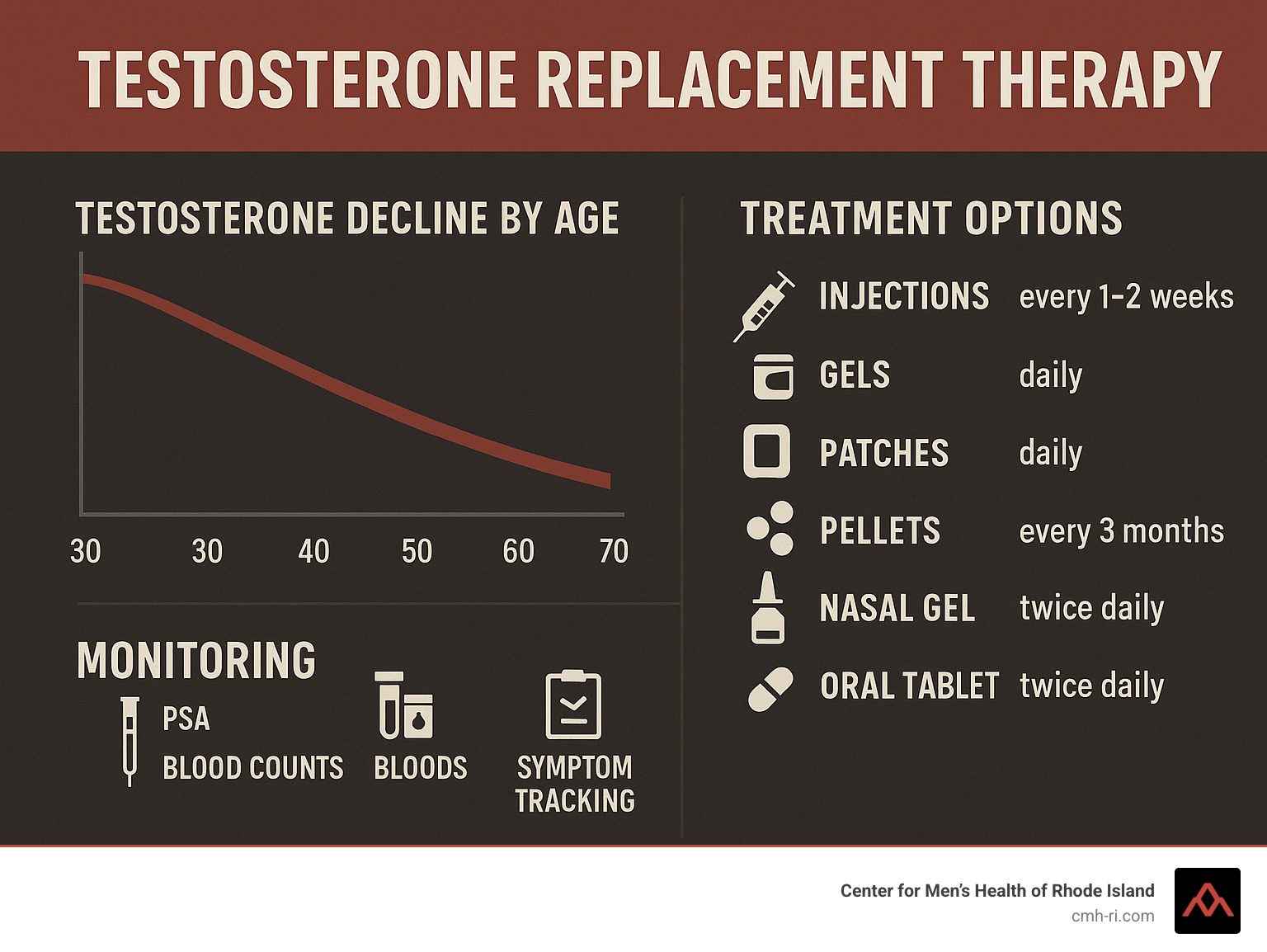
Nearly 40% of men over 45 experience low testosterone, with rates increasing to over 50% in men over 75. As testosterone naturally declines about 1% per year after age 30, many men notice significant changes in energy, mood, and sexual function.
The good news? Modern testosterone replacement therapy offers multiple safe, effective treatment options when properly prescribed and monitored by qualified healthcare providers.
I’m Len Berkowitz, PA-C, co-founder of the Center for Men’s Health Rhode Island in Providence, with 17 years of experience specializing in testosterone replacement therapy and men’s sexual health. My team and I have helped hundreds of men restore their vitality through evidence-based hormone treatments.
Basic testosterone replacement therapy vocab:
– low testosterone symptoms in men
– trt side effects
– trt therapy near me
Understanding Testosterone Replacement Therapy
Testosterone replacement therapy is medical treatment that brings your hormone levels back to where they should be. The FDA has approved TRT specifically for treating hypogonadism, which is the medical term for when your body doesn’t produce enough testosterone.
For TRT to be medically appropriate, you need two things: testosterone levels below 300 ng/dL on blood tests AND symptoms that affect your daily life. Low testosterone happens for many reasons – age is the biggest factor, but we also see it in men with diabetes, obesity, sleep apnea, chronic illnesses, or certain medications. Scientific research shows how aging affects testosterone production in complex ways.
Testosterone Replacement Therapy vs. Anabolic Steroids
Medical testosterone replacement therapy and anabolic steroid abuse are completely different. When we prescribe TRT, we use physiological doses – amounts that restore your testosterone to normal levels, typically between 300-1000 ng/dL. Steroid abusers use doses that are 10 to 100 times higher than what we prescribe, creating serious health risks.
How Testosterone Works in Men’s Bodies
Testosterone affects multiple body systems beyond just sex drive. Muscle and bone health depend heavily on testosterone – it stimulates protein synthesis and supports bone density. Your mood and mental clarity are directly connected to testosterone levels. Red blood cell production is another key function, which is why crushing fatigue is common when T levels drop. And yes, sexual function is definitely affected, but it’s just one piece of a much bigger health puzzle.
Am I a Candidate? Diagnosis & Baseline Testing
Figuring out if you’re a good candidate for testosterone replacement therapy requires comprehensive evaluation. We need to measure your testosterone levels between 7-10 AM when they’re naturally at their peak. We typically require two separate morning measurements showing levels below 300 ng/dL.
But here’s the key: low numbers alone don’t qualify you for TRT. You need both low testosterone levels AND symptoms that are actually affecting your life. Beyond basic testosterone levels, we also check luteinizing hormone (LH) and follicle-stimulating hormone (FSH) to understand why your testosterone is low.
More info about testosterone testing
Common Signs of Low T
Fatigue is usually the first thing men notice – persistent tiredness that doesn’t improve with rest. Sexual changes include decreased libido, weaker erections, and reduced sexual satisfaction. Mood changes like depression, anxiety, and irritability are more common than most realize. Physical changes include decreased muscle mass, increased belly fat, and sometimes hot flashes.
Who Should Avoid Testosterone Replacement Therapy
Active or untreated prostate cancer is an absolute contraindication for TRT. The same goes for breast cancer, untreated severe sleep apnea, uncontrolled heart failure, and high hematocrit levels (over 54%). Other conditions require careful consideration and close monitoring, including enlarged prostate with severe urinary symptoms and recent heart attack or stroke.
Treatment Options, Timelines & Monitoring
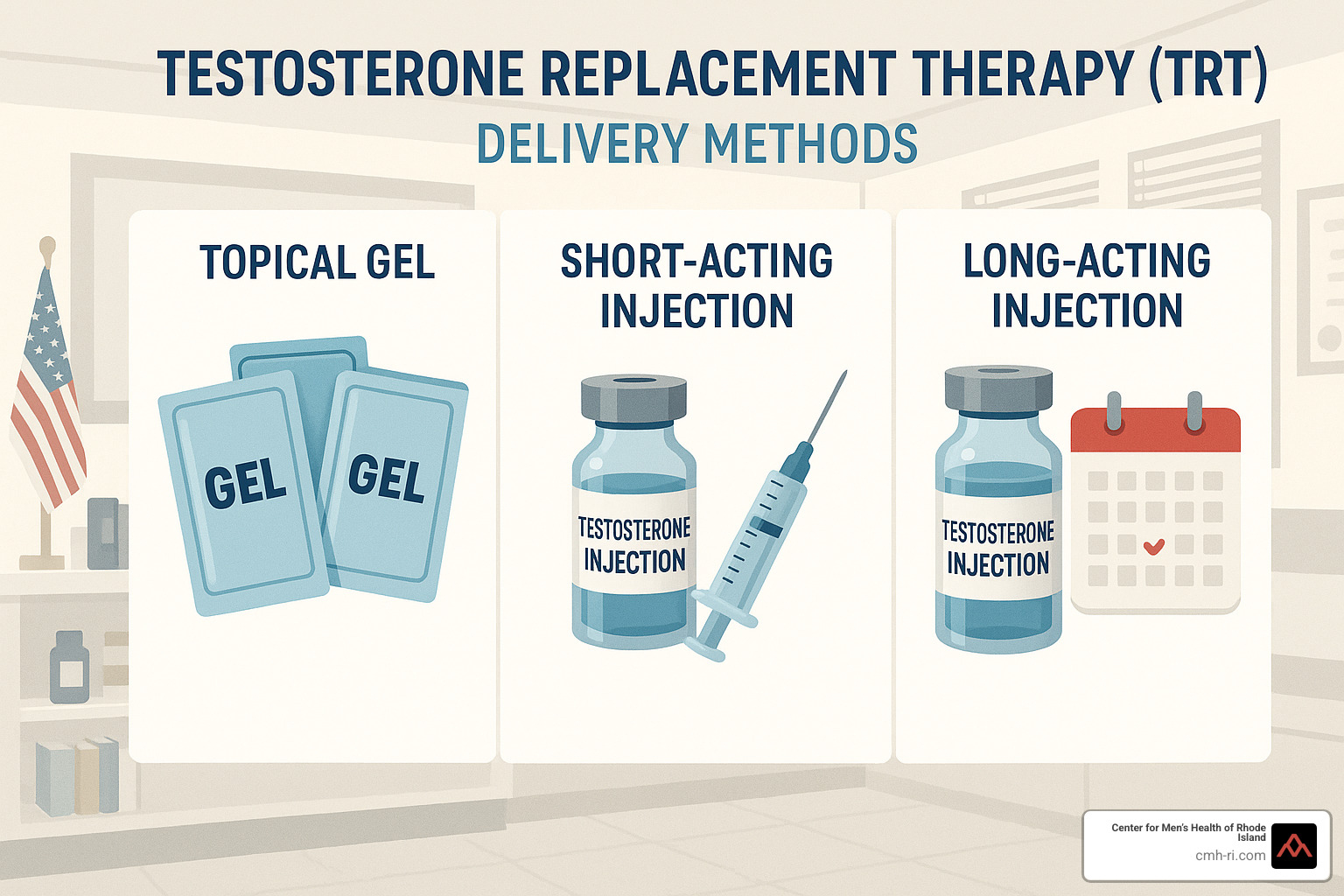
Modern testosterone replacement therapy offers multiple delivery methods to fit your lifestyle. Injection methods include testosterone cypionate or enanthate every 1-2 weeks, Aveed injections lasting 10 weeks, and Xyosted auto-injectors for weekly home use.
Topical applications offer convenience with daily gels applied to shoulders or arms, patches for your back or abdomen, and nasal gel applied three times daily. Pellets implanted under the skin last 3-6 months, while newer oral tablets and buccal tablets provide additional options.
| Method | Frequency | Pros | Cons |
|---|---|---|---|
| Injections | Weekly to bi-weekly | Cost-effective, proven | Possible mood swings between doses |
| Gels | Daily | Steady levels, convenient | Skin transfer risk, daily application |
| Patches | Daily | Steady levels, discreet | Possible skin irritation |
| Pellets | Every 3-6 months | Long-lasting, convenient | Minor procedure required |
Starting Testosterone Replacement Therapy: What to Expect
Most men notice subtle improvements in energy and mood around the 3-4 week mark, but the real benefits happen over 6-12 months. We schedule your first follow-up at 30 days to check levels and make adjustments, then again at 3 months for symptom evaluation.
Ongoing Monitoring & Lab Schedule
Safety monitoring includes testosterone levels, complete blood counts to watch for polycythemia, PSA testing for prostate health, and liver function tests. We see you at 30 days after starting, again at 3 months, then every 6-12 months once stable.
Adjusting or Stopping Therapy
Dose adjustments happen based on how you feel and lab results. Stopping TRT is always an option – your natural testosterone production will gradually restart over several months. We can use HCG to help restart natural production more quickly, especially for men concerned about fertility preservation.
Benefits, Risks & Long-Term Safety
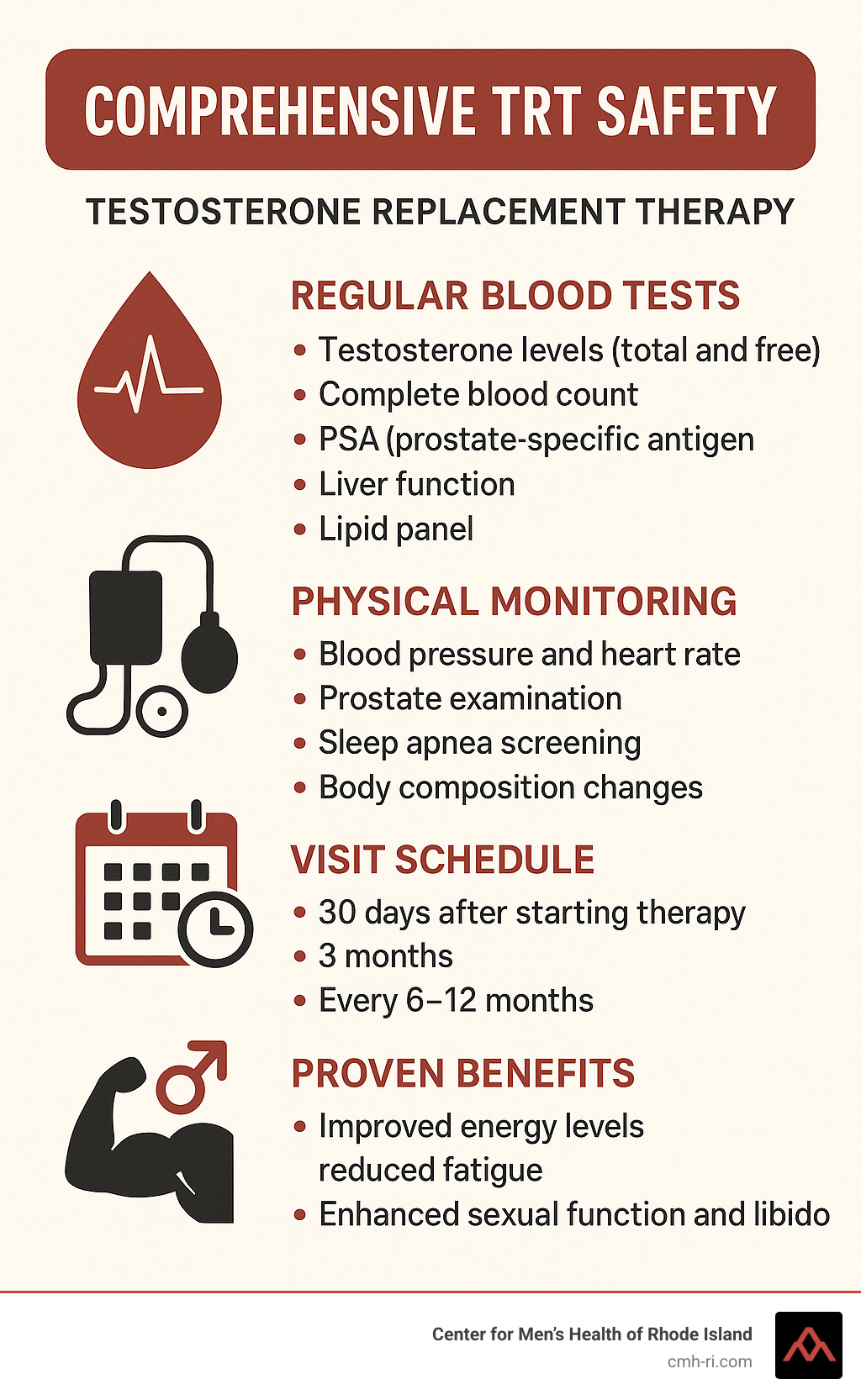
When testosterone replacement therapy is properly managed, benefits include dramatic improvements in energy levels and mood, sexual function, muscle mass and strength, and bone density. The safety profile is well-established when properly monitored.
Polycythemia (liftd red blood cell count) affects about one in five men on therapy. Prostate enlargement occurs in most men, with an average size increase of about 12%, but rarely causes urinary problems. Scientific research on TRT safety continues to support the safety of properly managed testosterone therapy.
Cardiovascular & Metabolic Effects
Recent research shows that properly managed TRT may actually reduce cardiovascular risk compared to leaving low testosterone untreated. Large studies show improved cholesterol profiles, better blood sugar control, and suggest a 33% reduction in heart attacks and strokes compared to untreated men with low T.
Testosterone Replacement Therapy and Prostate Health
The saturation model explains why prostate cancer fears are largely unfounded. Current research shows no increased prostate cancer risk with TRT in properly screened men. Benign prostatic hyperplasia symptoms often improve on TRT despite slight prostate enlargement.
Side Effects & How to Mitigate Them
Most TRT side effects are manageable. Acne is common initially but usually improves. Gynecomastia, fluid retention, skin irritation, and mood swings can often be resolved with dose adjustments or switching formulations.
Lifestyle & Alternative Strategies

Testosterone replacement therapy isn’t always the first solution. Sometimes your body just needs the right conditions to produce testosterone naturally again. I’ve seen men boost their testosterone levels by 200-300 ng/dL through lifestyle changes alone.
Weight loss is probably the most powerful natural testosterone booster. For every point you drop your BMI, testosterone typically increases by 15-20 ng/dL. Strength training with compound movements like squats and deadlifts can increase testosterone production by 15-20%. Sleep is crucial – men who sleep less than 5 hours per night can have testosterone levels 10-15% lower than those getting 7-8 hours.
Stress management matters because chronic stress lifts cortisol, which suppresses testosterone. Your body needs adequate vitamin D, zinc, and healthy fats to produce testosterone. Limiting alcohol is crucial since even moderate drinking can suppress testosterone production for days.
Preserving Fertility While on Testosterone Replacement Therapy
Testosterone replacement therapy will suppress sperm production for most men. If you’re planning children, we have several strategies: HCG therapy can maintain testicular function alongside TRT, SERMs like clomiphene maintain natural production and fertility, sperm banking before starting TRT provides future options, and treatment breaks when actively trying to conceive.
Frequently Asked Questions about Testosterone Replacement Therapy
How long does it take to see results from TRT?
Most men begin noticing improvements in energy and mood within 3-4 weeks of starting testosterone replacement therapy. Sexual function improvements follow a similar timeline. However, the really significant changes – improved muscle mass, bone density, and maximum sexual function benefits – take 6-12 months to develop fully.
How long can you safely stay on TRT?
Most men can safely remain on testosterone replacement therapy indefinitely with proper monitoring. I’ve been treating men with TRT for 17 years, and some patients have been on therapy for over a decade with excellent results. The key is regular monitoring with blood tests every 6-12 months.
What happens if you stop TRT suddenly?
Stopping testosterone replacement therapy suddenly causes your testosterone levels to crash back to pre-treatment levels within a few weeks. This creates a “hormonal rollercoaster” with return of all original symptoms. Your natural testosterone production will gradually resume over several months, but we can help you stop safely using medications like HCG if needed.
Conclusion
Testosterone replacement therapy has helped thousands of men reclaim their energy, confidence, and quality of life. At the Center for Men’s Health of Rhode Island in Providence, we’ve built our practice around personalized care that addresses each man’s unique needs, concerns, and goals.
Our approach starts with thorough evaluation and honest conversations about what TRT can and can’t do. We offer multiple treatment options because what works for one man might not be ideal for another. We’re with you for the long haul – TRT requires ongoing monitoring, adjustments, and support.
We believe in treating the whole person, not just the hormone deficiency. That means helping you optimize sleep, manage stress, improve diet, and stay active. Sometimes these lifestyle changes alone make a dramatic difference. Other times, they work with TRT to give you even better results.
If you’re dealing with fatigue, low libido, mood changes, or other symptoms that might be related to low testosterone, don’t just accept it as “normal aging.” When low testosterone is properly diagnosed and treated, the improvements can be remarkable.
Testosterone replacement therapy is serious medicine that requires professional supervision. Our team brings years of specialized experience to help you steer this journey safely and effectively. You deserve to feel your best – if low testosterone is holding you back, we’re here to help you explore your options and find the right solution.