Why Understanding Viagra Side Effects Matters for Your Health
Viagra side effects range from mild and manageable to serious and life-threatening. While most men tolerate this popular erectile dysfunction medication well, knowing what to expect helps you make informed decisions about your treatment.
Common side effects (affecting more than 1 in 100 people):
- Headache
- Flushing
- Upset stomach
- Dizziness
- Nasal congestion
- Vision changes
- Muscle pain
Serious side effects requiring immediate medical attention (less than 1 in 1,000 people):
- Erection lasting more than 4 hours (priapism)
- Sudden vision or hearing loss
- Chest pain or shortness of breath
- Severe allergic reactions
Viagra (sildenafil) works by blocking the PDE5 enzyme, which increases blood flow to the penis during sexual arousal. However, this same mechanism can affect other parts of your body, leading to the side effects listed above.
Most side effects are temporary and resolve within a few hours as the medication leaves your system. About 80% of Viagra is eliminated through your digestive system, with effects typically lasting 2-5 hours.
The key to safe Viagra use is understanding your personal risk factors. Men with heart conditions, low blood pressure, or those taking nitrate medications face higher risks of serious complications.
I’m Len Berkowitz, a nationally certified physician assistant with 17 years of experience managing men’s health conditions, including viagra side effects, at my Providence, RI practice. At the Center for Men’s Health Rhode Island, I’ve helped hundreds of men steer ED treatment safely and effectively.
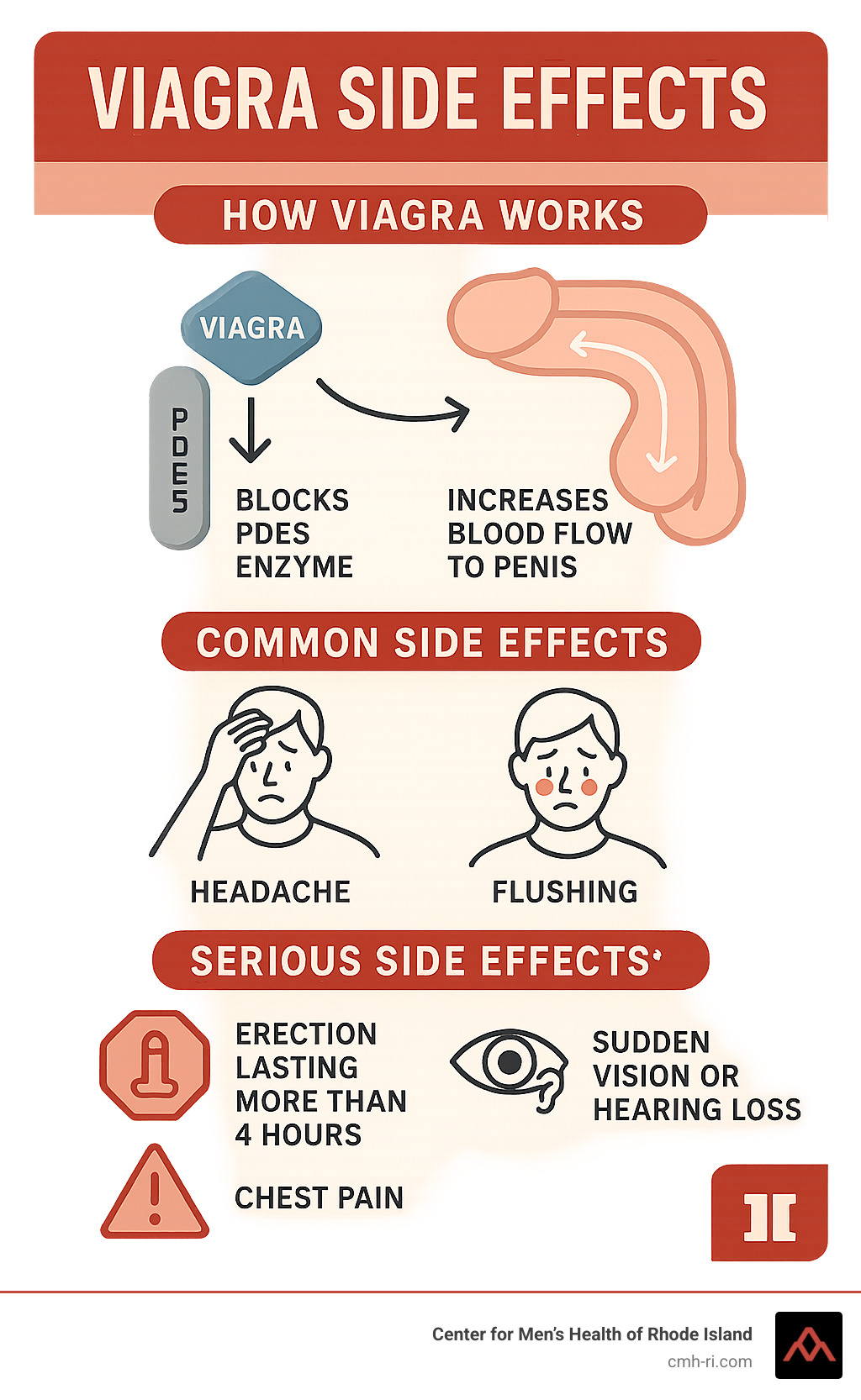
Common vs. Serious Viagra Side Effects

When it comes to Viagra side effects, knowledge is power. Most men experience either no side effects or mild ones that fade quickly. However, a few rare but serious reactions require immediate attention. At the Center for Men’s Health of Rhode Island, we provide the complete picture so you can make informed decisions about your health. More info about ED Symptoms
What are the common side effects of Viagra?
These everyday Viagra side effects affect more than 1 in 100 men. They are typically mild and fade as the medication leaves your system.
Headaches are the most common complaint, caused by Viagra widening blood vessels. Staying hydrated and using over-the-counter pain relievers can help.
Flushing, a warm, red feeling in the face or chest, is caused by increased blood flow and usually passes within a couple of hours.
Upset stomach or indigestion can occur. Taking Viagra with a light meal (not a heavy, fatty one) may help.
Dizziness can happen because Viagra temporarily lowers blood pressure. Be careful when standing up quickly.
Nasal congestion can occur because the medication also affects blood flow in your nasal passages.
Vision changes like a blue tinge, blurriness, or light sensitivity can occur as sildenafil affects eye enzymes. Though usually mild, these changes warrant attention.
Muscle pain and back pain are less common but can occur. These aches are generally mild and resolve on their own within a day or two.
Nausea and skin rash are also possible. Most common side effects are temporary, but if they are bothersome, talk to your provider about adjusting your treatment.
What are the serious side effects that require immediate medical attention?
Now for the serious stuff. These Viagra side effects are rare – affecting fewer than 1 in 1,000 men – but they require immediate action. If you experience any of these, stop taking Viagra and get emergency medical help right away.
Priapism is an erection that lasts more than 4 hours and is often painful. This isn’t the kind of “problem” you want to have. Left untreated, priapism can cause permanent damage to your penis. It’s a true medical emergency, so don’t wait it out or feel embarrassed about seeking help.
Sudden vision loss in one or both eyes is extremely serious. This condition, called Non-Arteritic Anterior Ischemic Optic Neuropathy (NAION), can lead to permanent vision loss. Any sudden change in your vision requires immediate medical attention.
Sudden hearing loss can happen rapidly and might come with ringing in your ears or dizziness. While rare, this side effect has been reported with Viagra use and shouldn’t be ignored.
Chest pain during or after sexual activity is particularly concerning, especially if you have a history of heart problems. Never take nitrates for chest pain if you’re also taking Viagra – this combination can cause a dangerous drop in blood pressure.
Shortness of breath that worsens suddenly can indicate a serious problem, particularly for men with existing heart or lung conditions.
Seizures are extremely rare but require immediate evaluation. Any new onset of seizures needs emergency medical care.
Severe allergic reactions can be life-threatening. Watch for sudden swelling of your lips, face, tongue, or throat, difficulty breathing, widespread rash, hives, or severe dizziness.
These serious side effects are uncommon, but recognizing them could save your life or prevent permanent damage. For additional information about sildenafil safety, you can review the FDA information on sildenafil.
Your health is too important to take chances with. When in doubt, seek medical attention – it’s always better to be safe than sorry.
How Viagra (Sildenafil) Affects Your Body Systems

Think of your body as a complex network of highways, and Viagra as affecting traffic flow throughout the entire system. While its main job is helping blood reach your penis for an erection, this little blue pill doesn’t just work in one location. As a PDE5 inhibitor, sildenafil influences enzymes found throughout your body, creating what we call systemic effects.
Understanding how these effects show up in different body systems helps explain why you might experience certain viagra side effects. At our Center for Men’s Health of Rhode Island, we believe knowledge is power – the more you understand about how your body responds to treatment, the more confident you’ll feel about your care. Find out about our Erectile Dysfunction Treatment
The Circulatory System
Your circulatory system is where Viagra does its heavy lifting. The medication works by relaxing smooth muscles and opening up blood vessels – a process called vasodilation. While this is exactly what we want to happen in your penis, it can affect blood vessels elsewhere too.
The most noticeable effect is a temporary drop in blood pressure, usually occurring 1 to 2 hours after taking Viagra. For most men, this drop is mild and barely noticeable. However, if you’re already taking medications that lower blood pressure, this becomes a serious concern.
Here’s where things get critical: nitrates (medications used for chest pain or angina) are absolutely off-limits when taking Viagra. Combining them can cause your blood pressure to plummet dangerously low, potentially leading to fainting, heart attack, or stroke. This isn’t just a precaution – it’s a life-or-death interaction.
Your body might respond to lower blood pressure by increasing your heart rate slightly. If you have existing heart conditions, these changes can be more significant. Men who’ve recently had a stroke or heart attack, or those with unstable angina, typically shouldn’t use Viagra. We take your cardiovascular health seriously – it’s always our first consideration.
The Reproductive System
This is Viagra’s specialty, but it’s important to understand exactly how it works. Viagra doesn’t create an erection out of thin air – it improves your body’s natural erection mechanism. When you’re sexually aroused, your body produces nitric oxide, which relaxes muscles in your penis and allows blood to flow in. Viagra simply makes this process more effective.
The most serious reproductive system risk is priapism – an erection lasting more than 4 hours. While rare, this is a true medical emergency. Blood becomes trapped in your penis, and without prompt treatment, permanent damage can occur. If you ever experience this, don’t wait – get to an emergency room immediately.
It’s worth noting that Viagra has no effect on your libido or sexual desire. It’s purely a mechanical helper for achieving erections. You’ll still need mental or physical stimulation for it to work. And remember, Viagra offers no protection against STIs or pregnancy – safe sex practices remain just as important. Learn about other ED Drugs
The Central Nervous System
Your brain and nervous system can feel Viagra’s effects too, mainly through changes in blood flow. Headaches are the most common side effect here, caused by blood vessels in your brain widening. Many men find these headaches mild and manageable with over-the-counter pain relievers.
Dizziness is another common experience, directly linked to that temporary blood pressure drop we mentioned. Be careful when standing up quickly, especially in the first few hours after taking Viagra.
Some men notice vision changes, particularly a blue tinge to their sight. This happens because sildenafil can affect PDE6, an enzyme in your retina. You might also experience blurred vision or increased sensitivity to light. These effects are usually temporary, but they can be unsettling.
Hearing loss is rare but serious. Some men report sudden decrease in hearing, sometimes with tinnitus (ringing in the ears) and dizziness. If this happens to you, stop taking Viagra and see a doctor right away.
The Digestive and Excretory Systems
Your digestive system processes and eliminates Viagra, which can cause some side effects along the way. Indigestion is common – that burning sensation in your stomach or chest that makes you reach for antacids. Some men also experience diarrhea or nausea.
Here’s an interesting fact: about 80% of Viagra leaves your body through your feces, with the rest eliminated in urine. Your liver does the heavy work of breaking down the medication using specific enzymes. This explains why gastrointestinal side effects can occur as your body processes the drug.
Most digestive viagra side effects are mild and temporary, resolving as the medication clears your system. Taking Viagra with a light meal can sometimes help reduce stomach upset, though heavy or fatty meals can slow down how quickly the medication works.
For detailed technical information about how Viagra is processed in your body, you can review the Viagra prescribing information from the FDA.
Safe Use, Dosage, and Precautions

Taking Viagra safely isn’t just about following the instructions on the bottle. It’s about understanding your body, knowing your medical history, and working with a healthcare provider who truly gets men’s health. At the Center for Men’s Health of Rhode Island, we’ve seen how the right approach can make all the difference between a positive treatment experience and unnecessary complications with viagra side effects. Explore our Mens Health Assessment
Recommended Dosage and Duration
Getting the dosage right is crucial for both effectiveness and safety. Think of it like finding the sweet spot – enough to work, but not so much that you’re dealing with unwanted viagra side effects.
For Erectile Dysfunction (ED), most men start with a 50mg dose taken about an hour before sexual activity. You have some flexibility here – it can work anywhere from 30 minutes to 4 hours before you need it. Your body will tell you what timing works best.
If you’re 65 or older, or if you have liver or kidney problems, your doctor will likely start you on a 25mg dose. This isn’t because we think you can’t handle the full dose – it’s because your body processes medications differently, and we want to avoid any unnecessary viagra side effects.
Sometimes 50mg isn’t quite enough, and that’s okay. Your dose can be adjusted up to 100mg or down to 25mg based on how well it works and how you feel. The key rule? Never take more than one dose in 24 hours. Taking extra won’t make it work better, but it will definitely increase your risk of side effects.
For Pulmonary Arterial Hypertension (PAH), sildenafil is used under a different brand name with completely different dosing – typically 20mg three times daily. This is a totally different ballgame from ED treatment, so don’t get confused between the two.
The effects of Viagra typically last 2 to 5 hours, though some men find it lasts a bit longer. You still need to be in the mood – Viagra doesn’t create desire, it just helps your body respond when you’re already interested.
Potential Drug Interactions to Avoid
Here’s where things get serious. Certain medications can turn Viagra from helpful to dangerous, and we need to talk about them openly.
Nitrates are the big red flag. These medications treat chest pain and come in many forms – pills, patches, sprays, and yes, even those recreational “poppers.” Mixing nitrates with Viagra can cause your blood pressure to plummet dangerously. We’re talking about a potentially life-threatening drop that could land you in the emergency room.
Alpha-blockers for high blood pressure or enlarged prostate can also cause problems when combined with Viagra. Both medications lower blood pressure, so together they might make you dizzy or cause fainting. If you’re on an alpha-blocker, we’ll likely start you on a lower Viagra dose and monitor how you respond.
Riociguat for pulmonary hypertension creates the same dangerous blood pressure drop as nitrates. It’s another absolute no-go combination.
Some antifungals like ketoconazole and antibiotics like erythromycin can boost Viagra levels in your system, making viagra side effects more likely. HIV medications can have the same effect, sometimes requiring us to significantly reduce your Viagra dose.
Even grapefruit juice can interfere with how your body processes Viagra, potentially increasing side effects. It’s easier to just skip the grapefruit while you’re on treatment.
Can Viagra cause long-term side effects?
Most viagra side effects disappear as the medication leaves your system, but there are rare cases where problems can persist. Let’s be honest about what you should watch for.
Priapism complications are the most serious long-term risk. If you have an erection lasting more than 4 hours and don’t get immediate medical help, you could end up with permanent damage to your penis. This isn’t something to “wait and see” about – it’s a true emergency.
NAION (sudden vision loss) is extremely rare, but when it happens, it can be permanent. The same goes for sudden hearing loss. These are the kinds of side effects that make us emphasize the importance of stopping the medication immediately and getting medical help.
Some men develop a psychological dependency on Viagra, feeling like they can’t perform without it. This creates a cycle of anxiety that can actually make ED worse. The good news is that this is something we can work through together with the right approach to treatment. Read about New Erectile Dysfunction Treatments
Key Safety Precautions
Safe Viagra use starts with an honest conversation with your doctor. We need to know about heart conditions like previous heart attacks, strokes, or irregular heartbeats. Sexual activity puts stress on your heart, and adding Viagra’s blood pressure effects requires careful consideration.
Liver or kidney problems affect how your body handles medications, potentially making viagra side effects more likely or severe. Bleeding disorders and stomach ulcers are also important to discuss, as we don’t have complete safety data for these conditions.
If you have Peyronie’s disease or other penile abnormalities, Viagra might not be right for you. These conditions can increase your risk of priapism or make existing problems worse.
Eye conditions, especially if you’ve had vision problems before, need special attention. The same goes for blood cell problems like sickle cell anemia, which can increase priapism risk.
The golden rule remains simple: never take more than one dose per day. It won’t make the medication work better, but it will definitely increase your chances of experiencing unwanted effects.
At our Providence, RI practice, we take the time to understand your complete health picture before recommending any treatment. Your safety isn’t just our priority – it’s the foundation of everything we do.
Frequently Asked Questions about Viagra Side Effects
After 17 years of helping men with ED treatment in Providence, RI, I’ve heard just about every concern imaginable. Let me address the most common questions about viagra side effects that come up during our consultations at the Center for Men’s Health of Rhode Island.
What should I do if I experience side effects from Viagra?
How you handle viagra side effects depends on what you’re experiencing. A mild headache requires a different response than chest pain.
For mild effects like headaches, flushing, or indigestion, you can often manage these at home. Rest and hydrate; drinking plenty of water and resting can help with headaches and dizziness. For indigestion, try taking Viagra with a light snack next time, though this might delay its effects.
Over-the-counter pain relievers can help with headaches or muscle aches. For a stuffy nose, a saline spray or steam can provide relief.
For bothersome effects that aren’t dangerous but affect your quality of life, like persistent dizziness, talk to your doctor. We might need to adjust your dose.
For serious effects like a prolonged erection, sudden vision or hearing loss, or chest pain, seek immediate medical attention. Stop taking Viagra and get emergency help right away.
Here’s what I recommend for common viagra side effects: Headaches respond well to rest, water, and avoiding alcohol. Dizziness means getting up slowly and lying down if you feel faint – definitely don’t drive. Flushing feels better in a cool room with cold drinks. Indigestion often improves with an antacid. Nasal congestion can be helped with saline sprays or steam.
Can Viagra cause permanent vision or hearing problems?
Yes, viagra side effects can very rarely include permanent vision or hearing problems, but these are extremely uncommon occurrences.
NAION (Non-arteritic anterior ischemic optic neuropathy) is the vision concern. It’s damage to the optic nerve causing sudden vision loss, typically in one eye, likely related to blood flow changes. The importance of stopping medication immediately cannot be overstated – if you notice any sudden vision changes, stop Viagra and get emergency care.
Sudden hearing loss is equally rare but serious. It can happen rapidly, sometimes with ringing in the ears or dizziness. This is also a stop-everything-and-seek-help situation.
These are rare but serious risks that I always discuss with patients. While the chances are small, the potential for permanent impact means we take any sudden changes in vision or hearing very seriously.
What is priapism, and how is it related to Viagra use?
Priapism is a concerning viagra side effect. Here’s what it is and why it’s a medical emergency.
Priapism is an erection lasting over 4 hours that won’t go away on its own. It’s usually painful and becomes more uncomfortable over time.
Blood flows into the penis for an erection, but with priapism, it gets trapped. Without fresh oxygen, this can damage the delicate tissues, which is why priapism is a medical emergency.
How Viagra can cause it relates to its effect on blood flow. Sometimes the mechanisms that let blood flow out don’t work properly. The risk of permanent penis damage is real; without treatment, you could end up with permanent erectile dysfunction.
Priapism from Viagra is rare. The key is knowing that an erection lasting more than 4 hours requires immediate medical attention, even if it’s not painful yet. Don’t be embarrassed—just get help.
I always tell my patients at the Center for Men’s Health of Rhode Island that being informed about these risks isn’t meant to scare you – it’s meant to keep you safe so you can enjoy the benefits of effective ED treatment.
Your Path to Safe and Effective Treatment
Understanding viagra side effects is just the beginning of your journey toward better sexual health. The real challenge often lies in finding personalized care that puts your safety and well-being first.
At the Center for Men’s Health of Rhode Island, we know that every man’s health story is unique. What works perfectly for your friend might not be the right fit for you. That’s why we take time to understand your complete medical history, current medications, and personal health goals before recommending any treatment.
Navigating side effects doesn’t have to be a guessing game. When you work with our team, you’ll have expert guidance every step of the way. We’ll help you recognize which effects are normal and temporary, and more importantly, we’ll teach you when to seek immediate help.
Professional guidance makes all the difference. Many men try to manage ED on their own, sometimes ordering medications online without proper medical supervision. This approach can be dangerous, especially when you don’t fully understand potential drug interactions or have underlying health conditions that increase your risk of serious viagra side effects.
Our personalized care approach means we consider your whole health picture. We’ll discuss your heart health, blood pressure, other medications, and lifestyle factors that could affect how Viagra works for you. If Viagra isn’t the right choice, we’ll explore other effective options that might be safer for your specific situation.
Serving Providence, RI and the surrounding areas, we provide the kind of in-person, comprehensive care that you simply can’t get from online consultations or quick pharmacy visits. When you have questions about side effects or concerns about your treatment, you can reach us directly.
Taking control of your health means being proactive about both the benefits and risks of any medication. It means having honest conversations with healthcare providers who understand men’s health issues. And it means choosing a treatment partner who prioritizes your long-term well-being over quick fixes.
Experiencing some mild side effects doesn’t mean Viagra isn’t working or that you should stop treatment. With proper medical guidance, most men can find ways to minimize uncomfortable effects while still achieving excellent results.